





The Emblem of the Republic of Kazakhstan
 The Emblem is one of the main symbols of the state. The Russian term “gerb” for Emblem comes from the German word “Erbe” (legacy) and means hereditary distinctive sign that represents a combination of figures and objects to which a symbolic sense reflecting cultural and historical traditions of the state is given.
The history is an evidence of the fact that the nomads of the Bronze Age that inhabited the territory of modern Kazakhstan identified themselves with a special symbol which is called totem. Its graphical expression further got the name “tamga”. This term has been for the first time used in the Turkic Khaganate.
The Emblem of the sovereign Kazakhstan was officially adopted in 1992. The authors of the State Emblem are Kazakhstan’s famous architects Zhandarbek Malibekov and Shot-Aman Ualikhanov.
The State Emblem of the Republic of Kazakhstan has the shape of a circle (wheel). It is a symbol of life and eternity that was especially valued among the nomads of the Great Steppes.
The central heraldic element of the State Emblem is the image of shanyrak (an arched cross-shaped top of the Kazakh yurt) against a sky blue background which irradiates uyks (supports or bearings of the yurt) in the form of sunrays to all sides. On both right and left of shanyrak there are images of mythical winged quarter horses. At the top of Emblem there is a volumetric five-pointed star. There is also the inscription “Kazakhstan” at the bottom of the Emblem. The images of shanyrak, uyks, and mythical horses, as well as the inscriptions “Kazakhstan”, have the colour of gold.
Shanyrak is a main backbone part of the yurt that resembles a blue sky. It is also one of the key elements of Kazakh family dwelling in the traditional culture of Eurasian nomads. The image of shanyrak on the State Emblem of the republic is a symbol of common home and common homeland of all people living in Kazakhstan. The stable development of Kazakhstan depends on welfare of each citizen just like the strength and stability of shanyrak depends on reliability of all its uyks.
The winged mythical horses, tulpars, are the key heraldic element of the State Emblem. The image of the horse stands for such notions as bravery since time immemorial. The wings symbolize a centuries-old dream of multinational people of Kazakhstan to build a strong and prosperous nation. They represent pure thoughts and aspiration to successive and constructive development. The golden wings of racers also resemble golden sheaves of grain that are a sign of labor of the people of Kazakhstan and material welfare of the country.
In centuries past the horns are often used during ceremonial rites of nomads as well as a finial to their fighting banners. The images of heavenly grace, fertility of the earth and the military fortune in the form of various animals’ horns are always considered as integral parts in symbolic compositions of different peoples. Therefore, a winged horse with a horn of plenty is an important typological image which has deep semantic and historical roots.
Another element on the coat of arms is a five-pointed star. This symbol is used by man from ancient times and represents constant aspiration of people to the light of truth and the pursuit of the sublime and eternal matter. The image of a star on the State Emblem reflects the dream of people to build a state open to all countries of the world for cooperation and partnership. Hearts and arms of the people of Kazakhstan are open to representatives from all five continents.
The primary colour of the State Emblem is the colour of gold, which serves as a symbol of wealth, justice and magnanimity. The colour of blue sky symbolizes a serene sky, peace and prosperity.
The Flag of the Republic of Kazakhstan

The Flag is one of the main symbols of the state that represents its sovereignty and identity. The Russian term “flag” for Flag comes from the Dutch word “Vlag” and means cloth of officially adopted size and colour and commonly with an image of emblem (coat of arms).
The Flag of sovereign Kazakhstan was officially adopted in 1992. It was designed by Shaken Niyazbekov.
The State Flag of the Republic of Kazakhstan is a rectangular breadth of blue colour with the image of the sun in its center with a soaring steppe eagle underneath. Along the flagstaff there is a vertical band with the national ornamental patterns. The images of the sun, rays, eagle and ornament are of golden colour. The ratio of the Flag’s width to its length: 1:2.
In heraldry each colour has its own specific meaning. Thus, a blue-sky colour symbolizes honesty, fidelity and integrity. Moreover, the blue-sky colour has a deep symbolic meaning in Turkic culture. The ancient Turkic peoples always worship the Sky as their God, and their blue-sky banner symbolized devotion to Father Ancestor. The blue colour of the State Flag of Kazakhstan means pure sky, peace and prosperity, and self-colour of the background represents the unity of our country.
According to the heraldic principles the sun symbolizes wealth and abundance, life and energy. That is why the sun rays on the flag have the form of grain, a symbol of wealth and welfare. By representing the sun at its state attributes Kazakhstan reaffirms its commitment to universal values, which also indicates that the new young country is full of life-affirming energy and is open to all countries for cooperation.
The image of the steppe eagle is one of the main heraldic attributes which is used on coat of arms and flags of various peoples for centuries. This image is commonly considered as a symbol of power, insight and generosity. A soaring steppe eagle represents by itself a power of the state, its sovereignty and independence, aspiration to high goals and sustainable future. The image of the steppe eagle on the world outlook of Eurasian nomads has a special place and is associated with such notions as freedom and fidelity, sense of dignity and courage, strength and purity of thoughts. The symbolically rendered silhouette of the golden steppe eagle reflects aspiration of the young sovereign state to the heights of world civilization.
Another important element of the State Flag is a vertical band with the national ornamental patterns. This Kazakh ornament is one of the forms of specific artistic perception of world in strict accordance with aesthetic styles of the people. Representing a harmony of various forms and lines, it is also an expressive means of discovery of the inner world of the people. The national ornament along the flagstaff represents the art and cultural traditions of the people of Kazakhstan.
State symbols
| About the state symbols of the Republic of Kazakhstan |
| On approval of rules of placement of the National Flag, the National Emblem of the Republic of Kazakhstan and their images, and the National Anthem of the Republic of Kazakhstan |
| On approval of the Rules of replacement and destruction of the State Flag, State Emblem of the Republic of Kazakhstan that do not meet state standards |
|
The Flag of the Republic of Kazakhstan The Flag is one of the main symbols of the state that represents its sovereignty and identity. The Russian term “flag” for Flag comes from the Dutch word “Vlag” and means cloth of officially adopted size and colour and commonly with an image of emblem (coat of arms). Read more ... |
|
The Emblem of the Republic of Kazakhstan The Emblem is one of the main symbols of the state. The Russian term “gerb” for Emblem comes from the German word “Erbe” (legacy) and means hereditary distinctive sign that represents a combination of figures and objects to which a symbolic sense reflecting cultural and historical traditions of the state is given. Read more ...
|
|
The State Anthem of the Republic of Kazakhstan
The Anthem is one of the main symbols of the state. The Russian term “gimn” for Anthem comes from the Greek word “Gimneo” and means solemn, ceremonial song. The Anthem serves as an important sound symbol with a key value for the effective socio-political consolidation and ethnocultural identification of citizens of the country.Read more ...
|
Towards the EXPO-2017

|
Mini Expo - 2014 May 24 tehnoprake "Altai" was an exhibition Oskemen Expo-2014 Read more ...
EXPO-2017 through the eyes of young Technological Exhibition April 4 at the library was inaugurated technology exhibition "renewables. Made in Germany" with the participation of Mrs. Elizabeth Richter, cultural attache and press the Federal Republic of Germany to the Republic of Kazakhstan. EXPO-2017 through the eyes of young intellectuals
Information Seminar EXPO-2017
EXPO lessons
Popularly about EXPO |

Literature
Abdibekov NK Phased problem solving // Energy and electrical equipment. - 2015. - №1 (16). - P. 22-24
Abdigapar SE Conceptual project proposal for the implementation of the Kazakhstan content of the exhibition hall "Alnoor" at EXPO 2017 Astana - World Exhibition "Energy of the Future" // par. - Almaty, 2013. - № 3. - S. 27-33
Abenova, Svetlana. An alternative would be the energy of the sun: Ust-Kamenogorsk plant will be launched for the production of photovoltaic wafers, based on Kazakhstani silicon // Kazakhstanskaya Pravda. - 2012 - November 10th. - S. 6
Abenova C. Promoting energy future // Kazakhstanskaya Pravda. - 2014 - 27 of May. - 1.7 C.
Alibekova R. Construction Industry: technology of the future // Kazakhstanskaya Pravda. - 2015 - April 24. - S. 12
Biekenov KU methodology development and use of clean energy sources of the Republic of Kazakhstan // ЌazЎU Khabarshysy. Psychology Sociology zhјne seriyasy. - Almaty Ќazaќ universitetі, 2014. - № 3. - S. 78-86
The Eighth World Summit Energy Future - 2015 (WFES 2015) // Energy and electrical equipment. - 2015. - №1 (16). - P. 14-15
Kindness L. Solar Project [Text] // Kazakhstanskaya Pravda. - 2015. - 14 April. - S. 5
Kulsartov A. Green Building and its development prospects in Kazakhstan // par. - Almaty, 2014. - № 1. - pp 25-27
Lebedev It will bring the sun kilowatts // Kazakhstanskaya Pravda. - 2015. - 21 April. - S. 9
Mahin B. In the future - with new technologies // Kazakhstanskaya Pravda. - 2015 - 30 January. - S. 10
Osipov V. Area ideas // Kazakhstanskaya Pravda. - 2014 - February 21. - S. 13
A. About Sagatova components of national competitiveness of Kazakhstan in the energy sector // Eurasian community: economy, politics, culture. - Almaty, 2014. - № 4. - P. 4-8
Stroyev D. Transport services - to a new level // Kazakhstanskaya Pravda. - 2014. - 18 April. - S. 7
Tokmoldin N. The energy source of the future // Kazakhstanskaya Pravda. - 2014. - 10 April. - S. 4
Averyanov OV Cost-effectiveness of energy-saving measures
Epikhina R. strategy of alternative energy development in Rizhao, China
Zakharchenko DA Koretskaya VA old TE LED lamps - effective way to save energy
Zernov TV Energy of the Future
Zueva MA Ecological and economic policy conditions of transition to alternative energy sources
May B. Alternative energy sources. The development of "gratuitous" energy
Marchenko GN, Altynbaev ER Prospects for the use of new fuels and the development of renewable energy sources
Muslimov AD Non-traditional and alternative sources of energy: prospects for development
Svalova VB Complex use of geothermal resources
Sergeeva ZH Whether threatens death hydrocarbon civilization? Theoretical discussions "bumsterov" and "doom"
Sysoev MS State regulation of innovation and investment projects in the field of alternative energy sources
Sysoev MS The use of modern information technologies in the economic evaluation of the introduction of alternative sources of energy in industrial enterprises
Fokin VM, Bodrov EV Energy efficient alternative scheme for the use of geothermal heating systems
Shostakovskii P. Thermoelectric alternative power sources
Me and the Earth: Environmental Youth magazine. - 2012. - № 3; 2012. - № 4; 2013. - № 1; 2013. - № 2
The fund Pushkin library
(On the electronic delivery of articles and fragments of books, contact EDD service)
Books:
Lumps VA Energy efficiency in housing and communal services: a tutorial / VA Komkov, NS Timahova, 2010. - 320 p.
Mozhayeva SV Economy energy production [Text]: Textbook / Mozhayeva SV, 2003. - 208 p.
Alternative and renewable energy sources: an analytical overview / National Center of Scientific and Technical Information of the Republic of Kazakhstan, East Kazakhstan branch of JSC "NCSTI", 2008. - 29 p.
Problems of world energy development: the experience of Kazakhstan, 2012. - 228 p.
Urban ecology: textbook, 2008. - 832 p.
Article:
Abseitov ET Energy savings in the developed world and their solutions with respect to the Republic of Kazakhstan and Russian // Water management in Kazakhstan. - 2011. - № 9. - S. 23-27
Don A. wind and solar energy // Kazakhstanskaya Pravda. - 2012. - 29 of May. - S. 8
Sakenbaeva G. union for the sake of [the prospects of alternative energy] // Legal Newspaper. - 2011. - May 4th. - S. 4
Expo links
 The World's Fair Museum Since 1998 - http://www.expomuseum.com
The Association of Solar Energy of Russia - http://pvrussia.ru
"The future belongs to renewable sources of energy" on site "Eco World" - http://world-eco.org
"Tidal power" on the information resource of energy - http://ukrelektrik.com
Website to promote the world exhibition EXPO-2017 in Astana - www.expo2017astana.com
"Energy of the Future" portal "Popular Mechanics" - http://www.popmech.ru
"The energy of unity": the site of the Kazakhstan Association of Oil-Gas and Energy Sector - http://kazenergy.com
Energy-saving technologies, alternative energy sources. Ecology. Reviews, articles, advice - http://energyhall.blogspot.com
EXPO-2017
"The forthcoming exhibition EXPO-2017 in Astana should give powerful impetus to the country's transition to a" green "way of development. In the capital, will be presented to the world's best science and technology. Many of the people of Kazakhstan will be able to see with my own eyes," the energy of the future ", to which we aspire." (From the Message of President of Kazakhstan Nursultan Nazarbayev to the people of Kazakhstan. December 14, 2012)
World Exhibition EXPO is a major international platform to showcase technical and technological achievements of all mankind. In 2017, in Astana, from 10 June to 10 September, more than 100 countries will be showcasing their achievements within the theme "Energy of the Future." This topic includes the development of alternative sources of energy and the formation of a "green" economy.
 Towards the EXPO-2017 Towards the EXPO-2017 |
 Glossary EXPO Glossary EXPO |
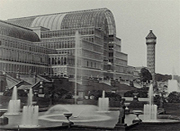 History of EXPO History of EXPO |
 References EXPO References EXPO |
 "Energy of the Future" "Energy of the Future" |
 Interesting facts Interesting facts |
 EXPO video EXPO video |
 Useful links Useful links |
This is interesting:
EXPO exhibitions are often the birthplace and gained enormous popularity of a wide variety of discoveries. For example, ice cream cups earned him popularity after the world's fair in 1904 in St. Louis, USA.
US researchers were able to use as a biofuel mushrooms "shiitake", which grows in South-East Asia. This type of mushroom has a unique ability to quickly identify the enzyme, allowing the wood to break down almost immediately and extract the nutrients.
In London, for movement between terminals and parking lots Heathrow Airport uses a system of unmanned electric ("green") taxis.
In Spain, near Seville, commissioned the world's largest thermal power plant such as "solar tower". This is only the second such installation in the world.
In Switzerland, in the small Alpine town of Tenna, it launched the world's first cable car that runs on solar energy.
"Urban Cactus" (Rotterdam, Netherlands), "The Hearst Tower" (New York, USA), "The Pearl River Tower" (Guandzhou, China) ... -10 most environmentally friendly skyscrapers in the world.
More Articles...


Герои Великой Победы казахстанцы
.
По Уссурийскому краю

Охота за головами

Прототюрки и зарождение античных олимпийских игр

Анатомия и физиология сельскохозяйсвенных животных

Исчезающая ложка, или Удивительные истории из жизни периодической таблицы Менделеева

Ремонт и обслуживание котельного оборудования

Зоогигиена с основами ветеринарии

Казахстан и его соседи: возможности и ограничения

Литература народа Казахстана

Диалогическое обучение на уроках технологии

Форматы и приёмы среднесрочного планирования

И помнит мир спасенный...

Народный календарь

Человек, который изобретал

Этнография Алтая и сопредельных территорий

В один клик

Воспитание в стиле MODERN

Креативная уверенность

Практика малых дел

Исследование учителем собственной практики

Тайны русификации казахов

Историческая география степных областей Казахстана в XIX-начале ХХ вв.

ХХ век: портреты выдающихся деятелей

Атлас анатомии человека

Йога с Валерией

Учебник юного шахматиста

Рассказы о Великой Отечественной войне

Эконометрика

Великое кочевье

Казахстан в экономике Азии: актуальные тенденции международного сотрудничества

Путевые дневники и записки российских чиновников и исследователей о Казахской степи XVIII - середины XIX века

Дизайн. Почему это шедевр

Маркетинг в социальных сетях

Арабографические источники по истории Казахстана

Чего хотят мужчины

Органическая продукция сельского хозяйства

Постиндустриальные тренды в стратегии инновационного развития РК
Статистика
- Visitors : 6
- Articles : 2881
- Articles View Hits : 26596103
 +7(7232) 261-333 +7(7232) 261-333 |
 +7(7232) 609-087 +7(7232) 609-087 |
 director@pushkinlibrary.kz director@pushkinlibrary.kz |
 st. Kazakhstan, 102 st. Kazakhstan, 102 Ust-Kamenogorsk East Kazakhstan Region |
East Kazakhstan Regional Library A.S. Pushkin © 1998 - 2023
 |
 |
 |